
Search for quartz countertops in 2026 and you will quickly run into headlines about a silica dust ban. If you are planning a kitchen or bathroom renovation in Canada, that raises fair questions. Is quartz being banned? Is the countertop already in your home unsafe? Should you change your plans?
The honest answer is more measured than the headlines suggest. As of late September 2026, we could not find any federal or provincial ban on engineered stone in Canada. Australia has banned it, California is moving toward prohibiting its fabrication, and Canadian doctors are drawing attention to the risks faced by the workers who cut it.
This guide explains what is actually happening, what it means for homeowners and trade professionals, and how to choose a countertop stone with confidence. Vietcan Stone supplies stone slabs to Canadian homeowners, designers, fabricators, and contractors, and we wrote this article to give you clear, sourced information rather than alarm.
Is Quartz Banned in Canada?
No. As of September 2026, quartz countertops and other engineered stone countertops can still be sold, fabricated, and installed in Canada. A report published this month in the Canadian Medical Association Journal describes the current situation as an absence of a ban on engineered stone.
What Canada does have is a set of workplace safety rules that apply to anyone who cuts, grinds, or polishes stone. Those rules are set by each province and territory, so they vary across the country.
Key takeaway
There is no Canadian ban on quartz countertops in 2026. The health concern documented by Canadian and international agencies centres on workers who breathe dust while cutting, grinding, and polishing engineered stone.
What Is Silica Dust and Why Is Engineered Stone in the Spotlight?
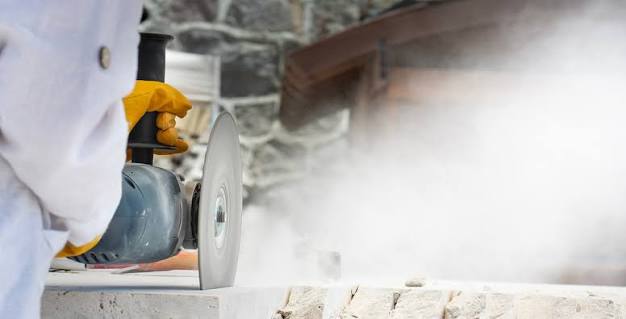
Crystalline silica is a mineral found in sand, granite, quartz, and many other natural materials. It is stable while it stays locked inside a solid slab. The problem begins when a tool cuts, drills, grinds, sands, or polishes the material. Tiny particles become airborne and can be breathed deep into the lungs.
Breathing respirable crystalline silica over time can cause silicosis, an incurable lung disease. The Canadian Centre for Occupational Health and Safety, known as CCOHS, also links silica exposure to chronic obstructive pulmonary disease and lung cancer.
Engineered stone, sold in Canada as quartz, is made from crushed quartz bound with resins and pigments. It receives more scrutiny than natural stone because of what it contains. According to CCOHS, engineered stone can contain 90 to 97 percent silica, while granite contains less than 45 percent and marble usually less than 5 percent.
CCOHS also notes that dust from engineered stone has different properties than dust from natural stone, including a higher share of extremely small nanoscale particles. Because engineered slabs are often lighter and easier to process, workers may also finish more countertops in a shift, which can increase their exposure.
Where Silica Bans Stand in 2026
Australia: The First National Ban
Australia became the first country to ban engineered stone. The ban took effect on July 1, 2024, and covers the manufacture, supply, processing, and installation of engineered stone benchtops, panels, and slabs that contain at least 1 percent crystalline silica.
Safe Work Australia reports that most silicosis cases it has identified are linked to engineered stone workers, who develop the disease faster and with more severe progression. The agency also states that there is no evidence that working with lower silica engineered stone is safer. The ban does not cover porcelain or sintered stone products that contain no resin.
California: A Fabrication Ban Is Moving Forward
In the United States, California is furthest along. On May 21, 2026, the state Occupational Safety and Health Standards Board voted unanimously to begin the process of prohibiting the fabrication and installation of artificial stone containing more than 1 percent crystalline silica.
On September 16, 2026, the state agency Cal OSHA released a draft emergency regulation, and public comments remain open through September 30, 2026. The rule is not final. According to the California Department of Public Health, the state has recorded more than 560 engineered stone silicosis cases and 31 deaths since 2019.
Canada: No Ban, but Growing Attention
In Canada, workplace safety is regulated by the provinces and territories, and each jurisdiction sets its own legal exposure limits for silica. Some, including Ontario, also require specific control programs. British Columbia has adopted an exposure limit of 0.025 milligrams per cubic metre of air, according to the American Industrial Hygiene Association.
None of this amounts to a ban on the material. This month, the Canadian Medical Association Journal published a case report about a 47 year old countertop fabrication worker diagnosed with silicosis after about ten years of working with engineered stone. He is now awaiting assessment for a lung transplant. The authors stress that, without a ban, greater awareness among workers and health care providers is essential.
What Does This Mean for Homeowners?
For most homeowners, the documented risk is not sitting in the kitchen. CCOHS describes the concern as exposure to dust generated while these products are processed, and the workers most at risk are those in fabrication shops and on installation sites.
That said, homeowners are not just bystanders. Your renovation decisions can affect safety in several ways:
- On site cutting. Sink cutouts, cooktop openings, and edge adjustments made in your home can put dust into your living space and expose the crew. Ask for cuts to be made in a controlled shop or with wet methods and dust capture.
- Your choice of fabricator. The company you hire decides how carefully the people who make your countertop are protected.
- Future changes. Resizing, repairing, or removing a finished granite or quartz countertop later involves cutting again, so the same precautions apply.
- Supply and pricing. If major markets such as California restrict engineered stone, product availability and pricing could shift. We see no evidence of that in Canada today, so confirm current quotes with your supplier.
If you have health concerns related to past exposure, speak with your doctor or an occupational health professional.
What Trade Professionals Should Do Now
For fabricators, contractors, and designers, the direction of travel is clear even though Canadian rules have not changed. A rule adopted in one major market can shape the conversation in others, so it is sensible to prepare early.
- Review your dust control practices against the silica requirements in your province or territory
- Confirm that wet methods or on tool extraction are used on every cut, including on site work
- Keep worker training, respirator fit testing, and medical surveillance records current
- Ask suppliers for the safety data sheet and silica content of every slab you specify
- Be ready to offer lower silica alternatives when clients ask for them
Documenting your controls also gives clients and inspectors a clear picture of how your business protects its people.
Silica Content by Countertop Material
Not every stone carries the same silica load. The table below compares common countertop materials using the figures published by CCOHS and the Australian rules.
| Material | Type | Silica notes | Fabrication consideration |
|---|---|---|---|
| Engineered quartz | Engineered | Up to 90 to 97 percent according to CCOHS | Highest concern. Banned in Australia. |
| Granite | Natural | Less than 45 percent according to CCOHS | Contains silica. Wet cutting and dust control still required. |
| Marble | Natural | Usually less than 5 percent according to CCOHS | Much lower silica content. Dust control still good practice. |
| Quartzite | Natural | Typically rich in quartz, varies by stone | Treat as silica rich. Same controls as other stone. |
| Porcelain slab | Manufactured | Resin free porcelain is excluded from Australia’s ban | Cutting still creates dust and needs controls. |
Silica content varies by product and brand. Ask your supplier for the safety data sheet, which Canadian workplaces use to understand the hazards of a material.
How Canadian Workplace Rules Protect Workers Today
Canadian employers must protect workers from harmful silica exposure and reduce exposure as low as possible. CCOHS recommends following the hierarchy of controls, which starts with eliminating or substituting the hazard and moves down to protective equipment as a last line of defence. Common measures include:
- Using lower silica or silica free alternatives where possible
- Wet cutting, wet grinding, and wet cleaning to keep dust down
- Local exhaust ventilation and vacuum attachments fitted to tools
- Worker training and medical surveillance, such as chest imaging and lung function tests
- Respiratory protection programs that include fit testing
- No dry sweeping and no cleaning with compressed air
These rules matter, but they only work when they are followed. That is why the way a fabricator runs their shop is worth asking about before you sign a contract.
Questions to Ask Your Fabricator and Installer
You do not need technical knowledge to have a useful conversation. These six questions help you understand how a company protects its people and your home:
- Do you cut and polish with water or with on tool dust extraction?
- Is fabrication done in a shop with proper ventilation, and how do you handle cuts that must be made on site?
- Do your workers receive silica training and fit tested respirators?
- How do you meet the silica rules in our province?
- Can you provide the safety data sheet for the slab I am considering?
- How do you clean up dust when the installation is finished?
A company that answers these clearly and confidently is usually a good sign. Vague answers deserve follow up questions.
Choosing a Countertop With Silica in Mind
Engineered quartz remains legal in Canada and continues to offer consistent patterns and low maintenance. Choosing it responsibly means choosing your fabricator carefully. If you would rather reduce silica exposure across the supply chain, you have several strong alternatives, explored in our quartz vs. quartzite comparison and our quartz vs. marble guide:
- A natural stone with lower silica content than engineered quartz, excellent durability, and a wide range of colours. It benefits from periodic sealing — see our full natural stone sealing and maintenance guide.
- Usually the lowest silica content of the common options and prized for its veining. It can etch when exposed to acids, so it suits bathrooms and lower traffic kitchens best — our best quartz bathroom vanity countertops guide covers vanity-specific options too.
- Porcelain slabs. Heat resistant, stain resistant, and treated differently in Australia when resin free. Cutting still requires dust controls.
- A hard natural stone with striking patterns. It is silica rich, so the same fabrication precautions apply.
No material is risk free during fabrication. The safest approach combines a sensible material choice with a fabricator who takes dust control seriously.
What May Change Next
Regulation is moving quickly. Over the coming months, watch for California’s final decision after its comment period closes on September 30, 2026, any response from Canadian provincial regulators and health bodies, and new lower silica products from manufacturers. We will update this guide as the situation develops.
Frequently Asked Questions
Is quartz banned in Canada?
No. As of September 2026, engineered stone can still be sold, fabricated, and installed in Canada. Workplace safety rules apply to the people who work with it.
Is my existing quartz countertop dangerous?
The documented concern relates to dust created during cutting, grinding, and polishing, not to everyday use of a finished surface. If you plan to modify or remove the countertop, use a contractor who controls dust.
Is granite safer than quartz?
Granite contains less silica than engineered stone, according to CCOHS, but it is not silica free. Both materials need proper dust control during fabrication.
Will countertop prices change because of silica rules?
We have seen no evidence of Canadian price changes tied to these rules. Supply could shift if large markets restrict engineered stone, so ask your supplier for a current quote.
Choose Your Countertop With Confidence
Vietcan Stone supplies granite, marble, quartzite, quartz, onyx, and porcelain slabs to Canadian homeowners, designers, fabricators, and contractors.
Visit vietcanstone.com to browse our 15 most beautiful stone countertops for 2026, request samples, and speak with our team about the right material for your project and your fabrication needs.