
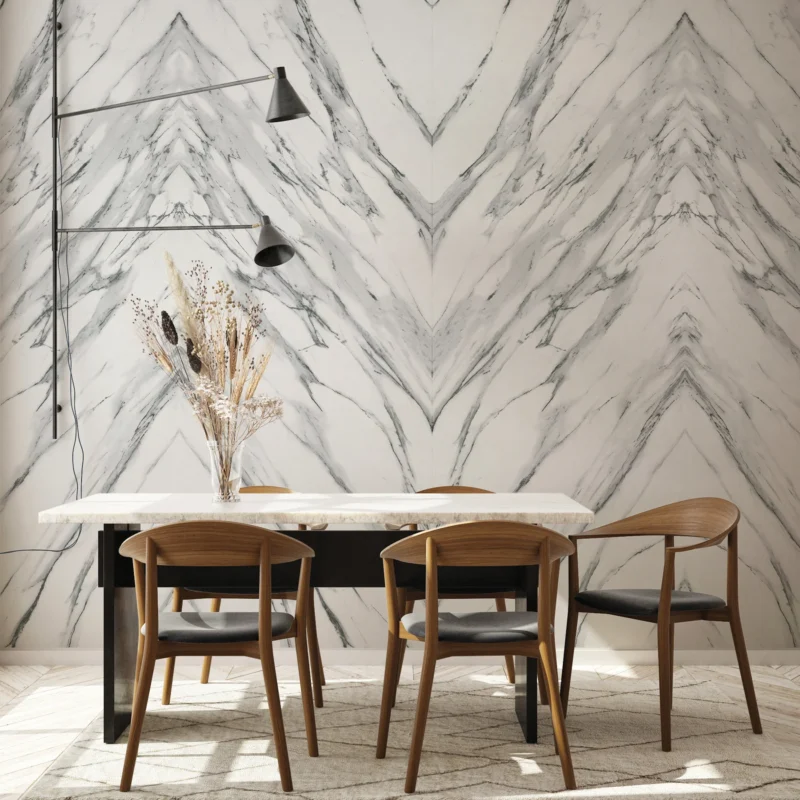
Walk into a high-end kitchen or a boutique hotel lobby and you may notice a dramatic pattern on a wall or an island where the veining seems to fold outward like the pages of an open book. This is book-matched marble, one of the most sought-after design features in natural stone today. It turns a simple slab of marble into a focal point that looks almost sculptural.
For Canadian homeowners and design professionals planning a kitchen renovation, a statement bathroom, or a custom fireplace, book-matched marble is often on the wish list. But it also carries a higher price tag and some practical trade-offs. This guide explains what book-matched marble actually is, how it is produced, where it works best, what it costs in Canada, and how to decide if it is the right choice for your project.
What Is Book-Matched Marble

Book-matched marble refers to two or more marble slabs that are cut from the same block, one directly after the other, and then installed side by side with one slab flipped like a mirror image of the other. Because the slabs come from consecutive cuts in the same block, their veining patterns line up almost perfectly at the seam, creating a symmetrical, reflective design that reads as one continuous artwork rather than two separate pieces of stone.
The term comes from the way the slabs are opened, similar to opening the two pages of a book. When the block is cut into thin slabs and those slabs are laid out in their original cutting order, adjacent pieces naturally mirror each other. Fabricators take advantage of this natural mirroring to design a striking, intentional pattern instead of leaving it to chance.
How Book-Matching Works
From Block to Slab
A raw marble block is cut into slabs, typically two to three centimetres thick, using a large gang saw or a diamond wire saw. Each cut produces a slab that is nearly identical in veining to the slab next to it in the sequence, because they were once immediately adjacent inside the block.
Selecting and Sequencing
Quarries and slab yards keep sequential slabs together and often label them so fabricators know which pieces were cut next to each other. When a fabricator or supplier like Vietcan Stone selects slabs for a book-matched project, they choose two or more consecutive slabs with strong, well-defined veining, since faint or busy patterns do not create the same visual impact.
Flipping and Fitting
One slab is used as it comes off the saw, and the neighbouring slab is flipped along the seam edge, like turning a page. The two pieces are then dry-laid, adjusted, and templated so the veining lines up as closely as possible before the seam is cut, polished, and permanently joined during installation.
Common Book-Matched Patterns
Fabricators generally offer a few standard layouts, each suited to different spaces and design goals.
- Two-Slab Book Match: The classic mirrored pair, most common for kitchen islands and vanity backsplashes.
- Four-Slab Diamond Match: Four panels arranged around a central point, often used for larger feature walls or flooring medallions.
- V-Match: Slabs are angled to form a V shape at the seam rather than a straight vertical line, used for waterfall edges on islands.
- Radial or Sunburst Match: Multiple slabs fanned outward from a central point, reserved for large-scale architectural features.
See more:
Where Book-Matched Marble Works Best in Canadian Homes
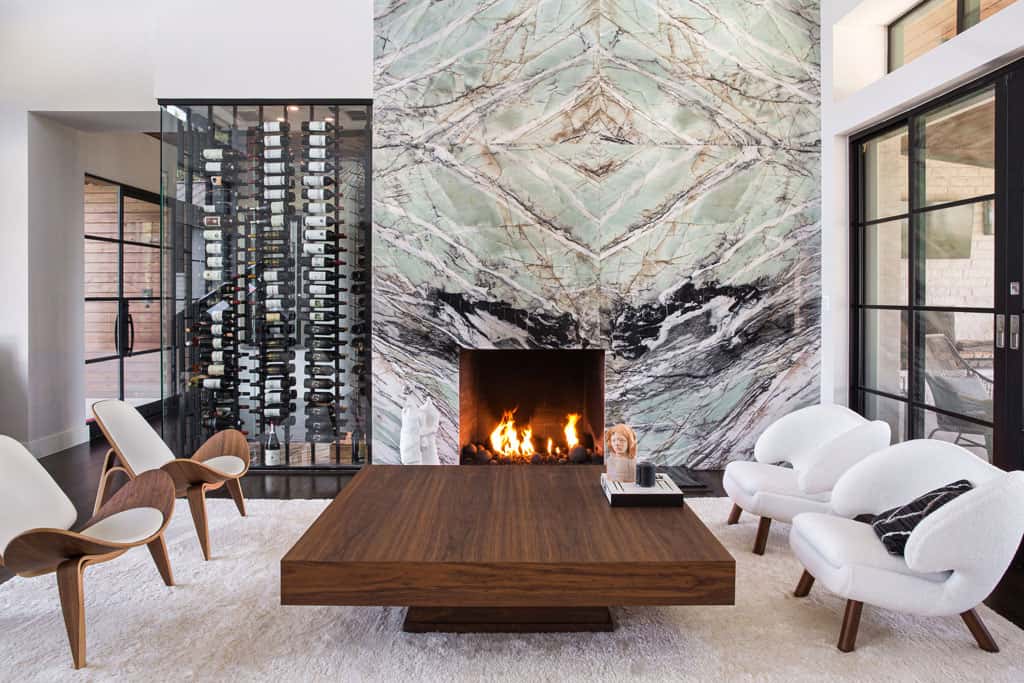
Book-matched marble is a design feature first and a functional surface second, so it tends to be reserved for areas where the pattern will be seen and appreciated rather than hidden under appliances or heavy daily wear.
Kitchen Islands
A waterfall-edge island with a book-matched top and matching sides is one of the most requested features among Canadian homeowners renovating mid to upper-range kitchens. The mirrored veining wraps continuously from the countertop down the sides, creating a sculptural centerpiece.
Bathroom Feature Walls
Powder rooms and primary ensuites are popular locations for a book-matched slab wall behind the vanity or inside a walk-in shower, since the smaller footprint of these rooms means a dramatic pattern can be appreciated up close.
Fireplace Surrounds
A book-matched marble surround, floor to ceiling, is a common feature in Canadian living rooms where the fireplace is the visual anchor of the room.
Backsplashes and Accent Walls
A smaller book-matched backsplash behind a range or cooktop offers the visual drama of book-matching at a lower material cost than a full wall or island, since fewer square feet are involved.
The Advantages of Book-Matched Marble
- Creates a one-of-a-kind, symmetrical pattern that cannot be replicated with engineered materials.
- Adds significant visual impact and can become the defining design element of a room.
- Increases perceived value and can support resale appeal in higher-end Canadian real estate markets.
- Showcases the natural beauty and mineral variation unique to true stone.
- Works across a range of styles, from traditional to contemporary, depending on the marble selected.
The Trade-Offs to Consider
- Higher material cost, since book-matching requires purchasing full consecutive slabs rather than the most efficient cutting layout.
- More material waste during fabrication, as slabs are cut to preserve the pattern rather than to minimize offcuts.
- Marble is softer and more porous than granite or quartz, so it is more prone to etching from acidic foods and requires regular sealing.
- Seam placement and pattern alignment depend heavily on fabricator skill, so experience matters more than with a standard installation.
- Slab availability can be limited, since finding two or more consecutive slabs with strong veining in the same block is not guaranteed.
See more:
Top 15 Most Beautiful Stone Countertops for 2026 Granite, Marble, Quartz & Quartzite
What Book-Matched Marble Costs in Canada
Pricing varies by marble type, slab grade, region, and fabrication complexity, but the table below reflects typical ranges Canadian homeowners can expect for materials and standard fabrication, based on current supply patterns.
| Application | Typical Size | Estimated Cost Range (CAD) |
| Book-matched backsplash | Approx. 20 to 30 sq ft | $2,800 to $6,500 |
| Book-matched island top with waterfall sides | Approx. 55 to 75 sq ft | $9,000 to $22,000 |
| Book-matched bathroom feature wall | Approx. 40 to 60 sq ft | $6,500 to $16,000 |
| Book-matched fireplace surround, floor to ceiling | Approx. 60 to 100 sq ft | $10,000 to $26,000 |
Estimates include material and standard fabrication and installation labour, and exclude demolition, plumbing or electrical work, and shipping to remote areas. Exotic marble varieties and larger diamond-match layouts can exceed these ranges.
| Vietcan Stone Tip
– Ask your supplier to dry-lay the exact slabs being used for your project before fabrication begins, so you can approve the pattern in person rather than from a photo. – Order slightly more material than the minimum required to give the fabricator room to adjust the seam position without compromising the match. – Confirm in writing which specific slabs are reserved for your job, since consecutive slabs from the same block can sell quickly. |
Is Book-Matched Marble Worth It
Whether book-matched marble is worth the investment depends on the role the surface plays in your home. For a single, highly visible feature such as an island, a fireplace wall, or a powder room vanity, many Canadian homeowners find the added cost justified because the pattern becomes a permanent design statement that is difficult to achieve with any other material, including engineered quartz.
For high-traffic, high-use surfaces such as a full kitchen countertop that will see daily cooking, book-matched marble is a bigger commitment, since marble requires more maintenance than granite or quartz and the premium pattern will be exposed to the same wear as any other countertop. Many homeowners address this by using book-matched marble on an island or backsplash for visual impact, while choosing a more durable quartz or granite for the main perimeter counters.
From a resale perspective, a well-executed book-matched feature can be a strong selling point in the Canadian market, particularly in urban and move-up housing segments where buyers are drawn to distinctive, photograph-ready kitchens and bathrooms. However, the return depends on overall home quality and local market expectations, so it should be viewed primarily as a design investment rather than a guaranteed financial return.
How to Choose the Right Slabs and Fabricator
Because book-matching depends on both material selection and cutting precision, the supplier and fabricator you choose matter as much as the marble itself.
- Work with a supplier who can show you the actual consecutive slabs reserved for your project, not just a catalogue photo.
- Ask how the fabricator plans to place the seam, since seam position affects how seamless the mirrored effect will appear.
- Request examples of previous book-matched installations, ideally including islands or walls similar in scale to your project.
- Confirm sealing and maintenance recommendations specific to the marble variety you select, since porosity varies between types.
Maintaining a Book-Matched Marble Surface
Marble should be sealed at installation and resealed periodically, typically every six to twelve months depending on use, to reduce staining and etching. Daily cleaning with a pH-neutral stone cleaner, prompt wiping of acidic spills such as wine, citrus, or vinegar, and the use of trivets and cutting boards will help preserve both the finish and the pattern that makes a book-matched installation worth the investment.
Frequently Asked Questions
Does book-matched marble cost more than a regular marble installation
Yes. Because consecutive slabs must be purchased together and more offcut waste is generated to preserve the pattern, book-matched marble typically costs more per square foot than a standard, non-matched installation using the same marble.
Can book-matching be done with granite or quartzite instead of marble
Yes. Book-matching is a fabrication technique that can be applied to any natural stone with strong directional veining, including granite and quartzite, though marble remains the most popular choice because of its dramatic, flowing patterns.
Is book-matched marble available in engineered quartz
Some quartz manufacturers now offer patterns designed to mimic a book-matched look, but true book-matching relies on the natural, non-repeating veining of a single stone block, which engineered quartz cannot fully replicate.
How long does a book-matched marble project take
Timelines vary, but sourcing the right consecutive slabs, templating, cutting, and installation typically take several weeks from material selection to final installation, longer if the marble variety must be special ordered.
Final Thoughts
Book-matched marble remains one of the most visually striking choices available in natural stone, and for Canadian homeowners and designers looking to create a defining feature in a kitchen, bathroom, or living space, it is often worth the additional investment. The key to a successful result is working with a supplier who can source strong, well-matched slabs and a fabricator experienced in achieving a clean, precise seam.
| Bring Book-Matched Marble Into Your Project
Vietcan Stone supplies premium natural marble and quartz slabs to homeowners, designers, and trade professionals across Canada. Our team can help you select, book-match, and install a slab that becomes the centerpiece of your space. |
Marble
Marble
Marble
Marble
Marble
Marble
Marble
Marble
Marble 


