
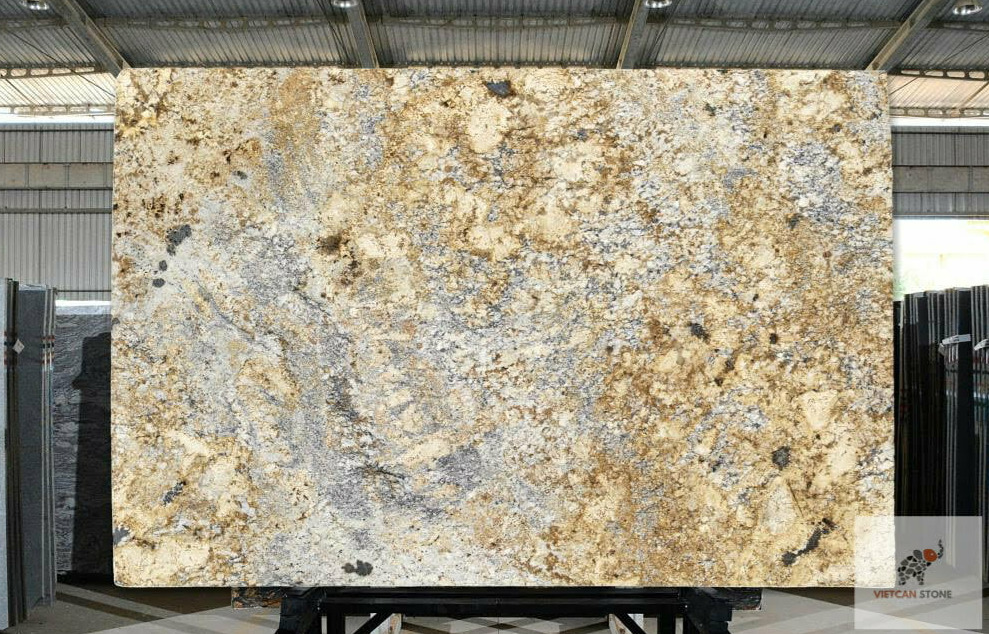
Granite is one of the hardest and most durable natural materials used in Canadian homes, but it is not indestructible. Homeowners across Canada, from Toronto condominiums to Calgary custom builds, occasionally notice a hairline crack running across a countertop or backsplash and wonder whether the stone itself has failed. In most cases, the granite is not the problem. The cause usually traces back to how the slab was supported, installed, fabricated, or used day to day.
Understanding Granite as a Material
Granite is an igneous rock formed from cooled magma, composed mainly of quartz, feldspar, and mica. This crystalline structure gives granite excellent compressive strength, meaning it resists crushing forces extremely well. What granite resists far less effectively is tensile stress, which is the force that pulls or bends a material rather than compresses it.
This distinction matters because most kitchen and bathroom cracks are not caused by someone dropping a heavy pot on the surface. They are caused by bending forces the stone was never designed to withstand, usually because of a gap in support beneath the slab.
The Most Common Causes of Granite Cracking
1. Insufficient Cabinet Support
Granite countertops rely on continuous, level support from the cabinet base below. When cabinets are unevenly installed, or when there are gaps at seams, corners, or around sink cutouts, the slab is left to bridge that gap unsupported. Over time, normal use such as leaning on the counter or placing weight near an unsupported edge creates enough flex to crack the stone, particularly along a natural vein or fissure.
This is one of the most frequent causes seen during fabrication and installation work across Canada, especially in older homes being renovated where the original cabinetry was never leveled for a stone top.
2. Unsupported Sink and Cooktop Cutouts
Cutting an opening for an undermount sink or a cooktop removes a significant portion of stone in that section of the slab. Without proper reinforcement, such as plywood support strips or metal bracing beneath the cutout, the remaining stone around the opening becomes a weak point. A heavy stockpot placed near the sink edge, or the weight of the sink itself over time, can be enough to crack an unsupported section.
3. Thermal Shock
Granite handles heat better than many other countertop materials, but sudden and extreme temperature changes can still cause stress fractures, particularly if the stone has an existing micro fissure. Placing a pot straight from a stovetop or oven onto a cold granite surface, or repeated exposure to a hot pan in the exact same spot, creates uneven expansion within the stone. Over months or years, this repeated thermal cycling can widen a hairline flaw into a visible crack.
4. Existing Natural Fissures
Granite forms over millions of years under extreme pressure, and many slabs contain natural fissures, which are thin lines within the stone where mineral composition changes slightly. A fissure is not a defect and does not always indicate weakness, but in some cases it can be a point of reduced structural integrity. Experienced fabricators inspect slabs for fissures before cutting and plan seam placement and cutout locations to avoid loading stress directly onto these natural lines.
5. Improper Transport and Handling
Granite slabs are heavy and brittle when unsupported. During transport, lifting, or installation, a slab that is not carried vertically on an A-frame, or that is dragged rather than lifted, can develop internal stress cracks that are not visible until weeks or months later, once normal daily pressure activates the weak point. This is why professional fabricators use A-frame racks, suction cup lifters, and proper crating for delivery, particularly important given the long transport distances involved in supplying stone across Canadian provinces.
6. Structural Movement in the Home
Homes settle over time, and in some regions of Canada, seasonal freeze-thaw cycles and foundation movement can shift cabinetry very slightly. Because granite is rigid and does not flex, even minor structural movement transferred through the cabinet base can be enough to crack a slab at a seam or a thin section, such as around a cutout.
7. Excessive Point Load or Impact
While granite resists scratching and general wear extremely well, a sharp, concentrated impact, such as a heavy cast iron pot dropped directly on an edge or corner, can chip or crack the stone. Corners and edges near sink cutouts are the most vulnerable areas because there is less stone mass to absorb the impact.
See more:
How Vietcan Stone Prevents Cracking During Fabrication
Prevention starts long before a slab reaches a Canadian kitchen. Vietcan Stone follows fabrication practices designed specifically to reduce the risk of cracking at every stage:
- Full slab inspection for natural fissures before cutting, with seam and cutout placement planned to avoid loading stress onto weak lines
- Reinforcement strips or plywood backing installed under sink and cooktop cutouts before the countertop leaves the shop
- Precision CNC cutting to maintain consistent slab thickness, since thin or uneven sections are more prone to flexing
- Templated fabrication based on an accurate on site template of the cabinet layout, rather than estimated measurements
- Proper A-frame transport and crated delivery to prevent handling stress during shipping across Canada
- Installer guidance provided to ensure cabinets are level and fully supported before the slab is set in place
Prevention Tips for Homeowners After Installation
Once granite countertops are installed, a few simple habits significantly reduce the risk of cracking over the years:
- Always use a trivet or hot pad under pots, pans, and bakeware, even though granite is heat resistant
- Avoid sitting or standing on countertop overhangs, particularly near unsupported peninsula or island edges
- Check that cabinet supports remain level over time, especially after any plumbing or renovation work nearby
- Use a cutting board rather than cutting directly on the stone, which also protects the sealant layer
- Have a professional inspect any hairline crack early, since small cracks are far less costly to repair than ones that have spread
- Avoid dragging heavy appliances or cookware across the counter surface, particularly near seams
Warning Signs to Watch For
Homeowners do not need to be experts to catch a developing problem early. A few warning signs are worth checking every few months, particularly in the first year after installation while the cabinetry and stone settle together:
- A hairline line that appears darker when wet, which often indicates a fissure that is beginning to open
- Slight movement or a hollow sound when pressing near a seam or sink cutout
- A crack that appears to extend from a corner or from the edge of a cutout
- Any visible gap between the countertop and the cabinet below at a seam
If any of these signs appear, it is best to contact the original fabricator or a qualified stone professional rather than attempting a do it yourself repair, since improper repair can widen a crack or trap moisture beneath the surface.
Is a Small Crack in Granite a Serious Problem
Not every hairline crack means the countertop needs to be replaced. Many minor cracks can be professionally filled and stabilized with a colour matched epoxy resin, restoring both appearance and structural integrity. The seriousness depends on the crack location, depth, and whether it continues to spread. A crack near an unsupported cutout or seam is generally more urgent to address than a superficial surface line in a well supported section of the slab, because the underlying support issue will keep applying stress until it is corrected.
Choosing a Fabricator That Reduces Long Term Risk
The single biggest factor in preventing granite cracks over the life of a countertop is the quality of fabrication and installation, not the granite itself. When comparing quotes from Canadian fabricators, homeowners and trade professionals should ask specifically about on site templating, cutout reinforcement practices, and how the fabricator handles seam placement around natural fissures. A fabricator who can answer these questions clearly is far more likely to deliver a countertop that stays crack free for decades.
Vietcan Stone works with both homeowners and trade professionals across Canada, applying consistent fabrication standards, proper structural reinforcement, and careful slab inspection on every project, from a single kitchen countertop to a full new build.
Frequently Asked Questions
Why is my new granite countertop already cracking
A crack appearing shortly after installation is usually related to unsupported cabinetry, an unreinforced cutout, or handling stress from transport, rather than a defect in the granite itself. Contact the installer to inspect the support structure underneath the affected area.
Can a cracked granite countertop be repaired instead of replaced
In most cases yes. A qualified fabricator can fill and stabilize a crack with colour matched epoxy resin. Full replacement is typically only necessary if the crack is extensive, structural, or continuing to spread despite repair.
Does hot cookware really crack granite countertops
Direct heat alone rarely cracks granite on its own, but repeated thermal shock in the same spot, especially over a pre existing fissure, can gradually contribute to a crack. Using a trivet is an easy way to remove this risk entirely.
How can I tell if my cabinets are properly supporting my granite countertop
A professional can check for level cabinet tops, continuous support at seams and cutouts, and proper shimming where needed. Any visible gap between the stone and the cabinet base is worth having inspected.
Is granite more likely to crack than quartz
Granite and quartz have different structural properties. Granite is a natural stone with occasional natural fissures, while quartz is engineered and generally more consistent in structure, though it can still crack under similar support failures. Proper fabrication and installation matter for both materials.
| Trust Your Countertops to Vietcan Stone
From careful slab inspection to reinforced cutouts and precision templating, Vietcan Stone builds every countertop to resist cracking for decades. Serving homeowners and trade professionals across Canada. Visit vietcanstone.com to request a quote or schedule a consultation. |
Granite
Granite
Granite
Granite
Granite
Granite
Granite
Granite
Granite
Granite
Granite
Granite 


