
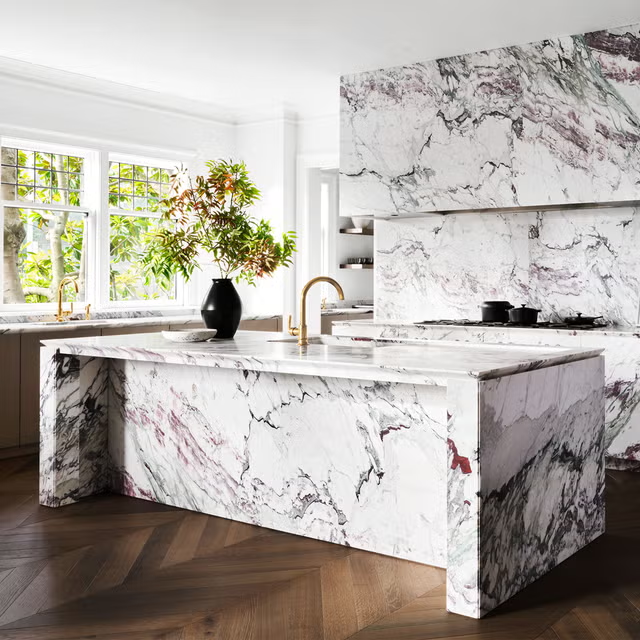
Your kitchen countertop is one of the hardest-working surfaces in your entire home. It endures boiling pots, sharp knives, acidic lemon juice, wine spills, heavy chopping boards, and years of daily family life — all while being expected to look beautiful. Choosing the wrong material can mean years of frustration with staining, etching, cracking, or high maintenance costs. Choosing the right one, however, can turn your kitchen into a stunning, enduring space that adds significant value to your property.
Natural stone countertops — granite, marble, quartzite, travertine, onyx, and limestone — have been prized for thousands of years for their beauty, uniqueness, and longevity. No two slabs are ever identical. Each carries the geological story of millions of years, bringing a depth and authenticity that no manufactured surface can replicate.
Factor 1: Hardness & Durability
Why Hardness Matters More Than You Think
When it comes to kitchen countertops, hardness is your first line of defense. A harder stone resists scratches, chips, and surface damage from the inevitable bumps and scrapes that happen in a busy kitchen. Stone hardness is typically measured on the Mohs scale, which runs from 1 (softest, like talc) to 10 (hardest, like diamond). For kitchen countertops, you want a stone that scores at least 6 to 7 on this scale.
How Different Stones Compare
- Granite (Mohs 6–7): One of the hardest natural stones available for countertops. Granite is formed from slowly cooling magma deep within the earth, giving it an interlocking crystalline structure that makes it highly resistant to scratching. It’s an excellent choice for high-traffic kitchens.
- Quartzite (Mohs 7–8): Often confused with quartz (engineered stone), quartzite is a natural metamorphic rock that starts as sandstone and is transformed by heat and pressure into one of the hardest stones used in kitchen applications. Quartzite is harder than granite in most cases.
- Marble (Mohs 3–5): Marble is softer and more porous than granite or quartzite, which makes it more vulnerable to scratching and etching from acidic foods and liquids. However, its timeless elegance makes it a perennial favorite for homeowners who are willing to provide the extra care it requires.
- Travertine (Mohs 3–4): A form of limestone formed from mineral springs, travertine has a distinctive layered texture. It is soft and requires regular sealing and maintenance in kitchen environments.
- Limestone (Mohs 3–4): Similar in hardness to travertine, limestone has a muted, earthy beauty but is not the most practical choice for heavily used kitchen surfaces without diligent maintenance.
- Onyx (Mohs 6.5–7): While onyx is relatively hard, it is more brittle than granite and can crack if subjected to heavy impact. Its translucent beauty makes it a popular choice for statement kitchen islands rather than primary prep surfaces.
| Expert Tip from Vietcan Stone
If you have young children, do a lot of cooking, or tend to be hard on surfaces, prioritize a stone with a Mohs hardness of 6 or above. Granite and quartzite are our top recommendations for active family kitchens. For a show-kitchen or low-traffic space, marble’s beauty may be worth the trade-off in hardness. |
Factor 2: Porosity & Maintenance Requirements
Understanding Why Porosity Is Critical in Kitchens
Porosity refers to how much open pore space exists within a stone. Highly porous stones absorb liquids more readily, which means bacteria, stains, and moisture can penetrate below the surface — creating hygiene issues and permanent discoloration. In a kitchen environment, where spills are a daily occurrence, porosity is a fundamental consideration.
All natural stones are porous to varying degrees, but proper sealing can significantly reduce the risk of absorption. The key is understanding how frequently each stone type needs to be sealed and how demanding day-to-day maintenance will be.
Porosity Levels by Stone Type
- Granite: Low to medium porosity. When properly sealed (typically once a year), granite is highly resistant to staining and moisture absorption. It is one of the most low-maintenance natural stones for kitchens.
- Quartzite: Low to medium porosity, similar to granite. High-quality quartzite seals beautifully and offers excellent stain resistance with annual maintenance.
- Marble: Medium to high porosity. Marble is particularly susceptible to etching — a chemical reaction caused when acidic substances (lemon juice, vinegar, wine, coffee) come into contact with the calcium carbonate in the stone. Etching leaves dull, light-colored marks that cannot be sealed away; they must be polished out. Marble requires sealing every 6–12 months and careful daily care.
- Travertine: High porosity, especially if it has unfilled holes (a natural feature of the stone’s formation). Travertine must be sealed regularly and cleaned promptly to avoid deep staining.
- Limestone: High porosity. Limestone is one of the more demanding stones in terms of maintenance and is generally best suited to lower-traffic kitchen areas or decorative applications.
- Onyx: Medium porosity. Onyx seals well but requires regular maintenance due to its softer, more delicate nature.
A Practical Maintenance Comparison
Here is a quick overview of the ongoing care requirements for each major stone type:
| Stone Type | Hardness | Durability | Maintenance | Cost | Aesthetic |
| Granite | 9/10 | 9/10 | Medium | Low | ★★★★ |
| Marble | 7/10 | 5/10 | Low–Med | High | ★★★★★ |
| Quartzite | 9/10 | 8/10 | Medium | Medium | ★★★★ |
| Travertine | 6/10 | 5/10 | Low | Low | ★★★ |
| Onyx | 5/10 | 5/10 | Low | High | ★★★★★ |
| Limestone | 5/10 | 4/10 | Low | Low | ★★★ |
| Maintenance Reality Check
Before falling in love with a stone purely for its looks, ask yourself honestly: Am I prepared to seal this surface every 6 months? Will I wipe up spills immediately? For busy households that want low-maintenance beauty, granite and quartzite typically deliver the best balance of aesthetics and practicality. |
Factor 3: Aesthetic Appeal & Design Compatibility
Natural Stone as the Visual Heart of Your Kitchen
Beyond performance characteristics, the visual impact of your countertop stone is perhaps the most emotionally compelling part of the selection process. Natural stone carries a visual depth, variation, and organic beauty that is simply impossible to manufacture. Each slab tells a geological story millions of years in the making.
However, aesthetic choice should never be made in isolation. Your countertop stone needs to work harmoniously with your cabinetry, flooring, backsplash, and the overall design style of your kitchen. Making the wrong aesthetic choice — even with a high-quality stone — can result in a kitchen that feels visually discordant.
Matching Stone to Kitchen Style
- Modern & Contemporary Kitchens: Look for stones with clean, consistent patterns — deep grey or black granites, white quartzite with subtle veining (such as Calacatta quartzite), or dramatic black marble. The boldness of natural stone’s veining can become a stunning focal point against flat-front cabinetry and stainless steel fixtures.
- Traditional & Classic Kitchens: Marble has been the stone of choice for traditional kitchens for centuries. Creamy white Carrara marble with soft grey veining, or beige-toned travertine with its warm earthiness, complement raised-panel cabinetry and ornate hardware beautifully.
- Rustic & Farmhouse Kitchens: Rough-edged granite in warm browns and golds, or honed (matte-finish) limestone, create the organic, lived-in aesthetic that farmhouse kitchens are known for. Honed finishes reduce the glossy formality of polished stone.
- Transitional Kitchens: Transitional design bridges contemporary and traditional, offering the most flexibility. Quartzite — which spans from white and grey tones to warm beiges and dramatic blues — is particularly versatile in transitional spaces.
- Minimalist Kitchens: For minimalist spaces, the stone itself becomes the design statement. A single, dramatic slab of bookmatch-patterned quartzite or marble creates maximum visual impact with minimal visual clutter.
Understanding Stone Finishes
The finish applied to natural stone dramatically changes both its appearance and practical performance. The three most common finishes for kitchen countertops are:
- Polished Finish: The most common finish, producing a high-gloss, mirror-like surface that intensifies the color and pattern of the stone. Polished finishes are relatively easy to clean but can show fingerprints and water spots more readily.
- Honed Finish: A matte or satin finish achieved by stopping the polishing process before the high-gloss stage. Honed finishes have a softer, more natural appearance and show fewer scratches and fingerprints — but they are more susceptible to staining because the surface pores are more open.
- Leathered/Brushed Finish: A textured finish that creates a subtle, organic surface with excellent tactile interest. Leathered granite and quartzite are particularly popular in contemporary design, and the texture naturally hides fingerprints and minor imperfections.
| Vietcan Stone Design Insight
Always view stone samples in your own kitchen under your specific lighting conditions before making a final decision. Natural stone changes dramatically under different light sources — what looks cool grey under showroom fluorescent lighting may reveal warm honey undertones under your kitchen’s warm LED lights. Request large format samples (30cm x 30cm minimum) from Vietcan Stone’s sample library. |
Factor 4: Budget & Long-Term Value
Thinking Beyond the Initial Price Tag
Natural stone countertops represent a significant investment, and understanding the true cost of ownership is essential for making a financially sound decision. While the upfront cost of the stone slab and installation is the most visible expense, the total cost of ownership over 10, 20, or 30 years includes sealing products and labor, potential repairs or re-polishing, and the impact on your property’s resale value.
General Price Ranges for Natural Stone Countertops
(Note: Prices vary significantly based on slab quality, origin, thickness, and local market conditions. The following are general guidelines in USD per square foot, including installation.)
- Granite: $40–$100 per sq ft. One of the most cost-effective natural stone options, with a wide range of grades from builder-grade to premium exotic slabs. Granite offers exceptional value for its durability and low maintenance requirements.
- Marble: $75–$250 per sq ft. Marble commands a premium due to its timeless prestige, but requires higher ongoing maintenance costs. The investment in high-quality marble can significantly elevate property value.
- Quartzite: $80–$200 per sq ft. Premium pricing that reflects its rarity, hardness, and the complexity of fabrication. Many quartzite varieties approach marble in appearance while offering superior durability — making it excellent long-term value.
- Travertine: $30–$80 per sq ft. One of the most affordable natural stone options, though ongoing maintenance and potential repair costs should be factored in.
- Limestone: $35–$80 per sq ft. Similar to travertine in price range, though higher maintenance requirements must be considered.
- Onyx: $150–$400+ per sq ft. A luxury statement material with limited practical application as a primary kitchen surface. Most commonly used for islands or feature panels where its translucency can be showcased with backlighting.
The Value of Natural Stone in Property Resale
Multiple real estate studies have consistently shown that high-quality natural stone countertops — particularly granite, marble, and quartzite — return significant value upon property resale. In many markets, premium natural stone kitchens command 3–7% higher sale prices than comparable homes with lower-specification countertops. When viewed through this lens, premium natural stone is not just a cost; it is an investment in your property’s long-term equity.
| Smart Budget Strategy from Vietcan Stone
Consider using a premium stone (marble or quartzite) for the most visible and decorative surfaces — such as the kitchen island or a feature section of perimeter countertop — and a more practical, cost-effective stone such as granite for the high-use prep areas. This ‘hero stone’ approach maximizes visual impact while controlling costs and maintenance demands. |
Factor 5: Heat, Scratch & Chemical Resistance
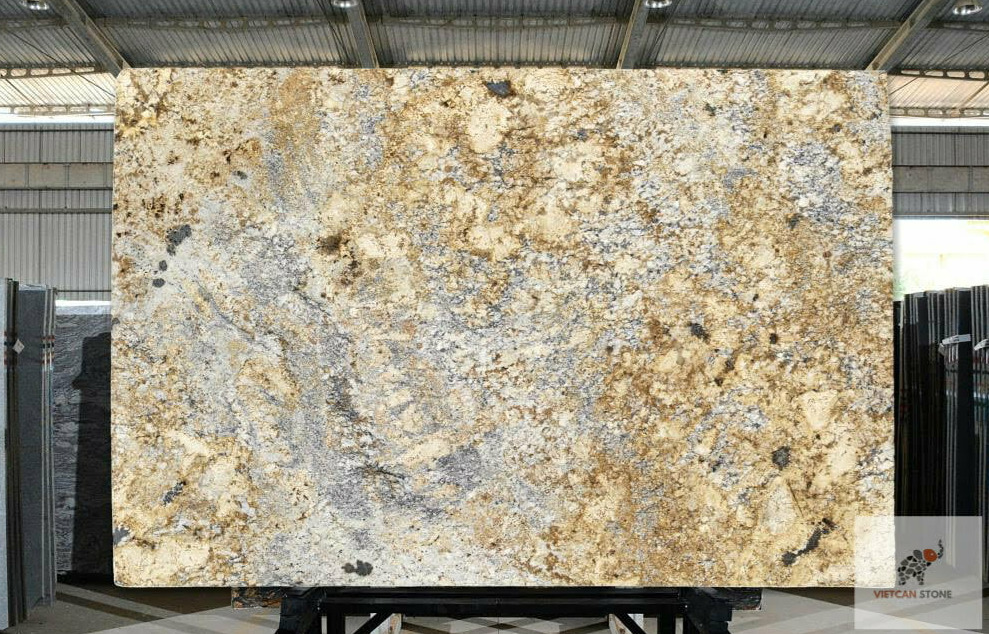
The Performance Tests Every Kitchen Countertop Must Pass
A kitchen countertop faces a uniquely demanding set of physical and chemical challenges on a daily basis. Understanding how your chosen stone performs under these real-world conditions will help you avoid costly mistakes and ensure your surface remains beautiful and functional for decades.
Heat Resistance
Natural stone is formed under extreme geological heat, which gives it a natural affinity for high temperatures. In general, natural stone countertops are highly heat resistant compared to many synthetic alternatives. However, “heat resistant” does not mean “heat proof.”
- Granite: Excellent heat resistance. A hot pan placed directly on granite is unlikely to cause immediate damage, but rapid thermal changes (from extremely hot to cold) can potentially cause thermal shock cracking in rare cases. It is still recommended to use trivets as a best practice.
- Marble: Good heat resistance, but the greater risk with marble is that thermal shock can cause discoloration or structural stress. Always use trivets.
- Quartzite: Similar to granite — excellent natural heat resistance with sensible precautions recommended.
- Travertine & Limestone: Adequate heat resistance for normal kitchen use, but their softer structure makes them more vulnerable to thermal shock.
Scratch Resistance
Scratch resistance is directly correlated with Mohs hardness (covered in Factor 1). The key practical implication for kitchen use is:
- Stones scoring 6 and above (granite, quartzite) will resist scratching from most kitchen knives and utensils.
- Softer stones (marble, travertine, limestone) will show scratching from metal utensils over time, particularly if used as prep surfaces. However, scratches in softer stones can often be polished out professionally.
- Regardless of stone hardness, using a cutting board is always recommended — both to protect the stone and to protect your knife edges.
Chemical Resistance
This is an area where natural stone’s performance varies significantly by type and requires careful consideration. The primary threat to natural stone in kitchens is acidic substances:
- Acids to watch out for: Lemon juice, lime juice, vinegar, wine, coffee, tomato sauce, and certain cleaning products. These acidic substances react with calcium carbonate-rich stones (marble, travertine, limestone) through a process called etching — dissolving the polished surface and leaving dull, hazy marks.
- Granite and quartzite: Much more chemically resistant to acids due to their silicate mineral composition. They can withstand brief contact with acidic foods without etching, though prompt cleaning is still recommended.
- Marble, travertine, limestone: Require immediate cleanup of any acidic spills to minimize etching. Even water droplets from acidic beverages can cause micro-etching over time.
| Chemical Safety Best Practices
Always use pH-neutral cleaning products on natural stone. Avoid bleach, ammonia, and vinegar-based cleaners — even ‘natural’ cleaning solutions can contain acids that damage stone. Vietcan Stone recommends dedicated natural stone cleaning products available through our showroom. |
Bonus: The 5-Step Selection Process — A Practical Framework
Now that you understand the five key factors, here is the practical framework used by Vietcan Stone’s design consultants to guide homeowners through the selection process:
- Define Your Kitchen’s Activity Level: Is this a working family kitchen with heavy daily use? Or a refined entertaining space? Match stone hardness and porosity to actual usage patterns.
- Set a Realistic Total Budget: Include not just the stone and installation, but sealing, maintenance products, and a 10–15% contingency. Consider the ‘hero stone’ strategy for maximum impact within budget.
- Gather Large Samples: Never select natural stone from small chips. Request full slab photos and, wherever possible, large-format samples that you can place in your actual kitchen space under your real lighting.
- Conduct the Practical Tests: Ask your supplier (or test on samples) with water absorption, lemon juice etching sensitivity, and scratch resistance tests to verify the stone’s real-world performance.
- Visit the Slab Yard: For marble and quartzite especially, the variation between slabs of the same stone name can be dramatic. Always view and approve the specific slabs that will be cut for your kitchen, not just a generic sample.
Conclusion: Your Perfect Kitchen Countertop Stone Is Waiting
Choosing a kitchen countertop stone is one of the most important decisions you will make during a kitchen renovation or new build. It is a decision that will live with you — visually, functionally, and financially — for decades. The five factors covered in this guide: hardness and durability, porosity and maintenance, aesthetic compatibility, budget and long-term value, and heat, scratch, and chemical resistance, provide a comprehensive framework to evaluate any natural stone with confidence and clarity.
Natural stone brings something to a kitchen that no other material can: the irreplaceable beauty of the natural world, refined and shaped by skilled hands into a surface that is both art and utility. Whether you are drawn to the timeless elegance of Carrara marble, the robust practicality of Brazilian granite, or the rare beauty of quartzite, your perfect stone exists.
The key is knowing what to look for — and having an expert partner to guide you through the selection, fabrication, and installation process with the knowledge and care your project deserves.
At Vietcan Stone, we believe every homeowner deserves access to premium natural stone and the expert guidance to choose and install it correctly. That commitment is at the heart of everything we do.
| 🏆 READY TO CHOOSE YOUR PERFECT COUNTERTOP STONE?
Vietcan Stone — Premium Natural Stone Supplier With over 15 years of expertise and a curated collection of 200+ natural stone varieties, Vietcan Stone helps homeowners, architects, and designers find the perfect stone for every kitchen. From rare imported marble to premium Vietnamese granite — we bring quality and beauty to your home. ✔ Free Design Consultation ✔ Sample Delivery ✔ Custom Cutting & Finishing 📞 Contact Vietcan Stone Today: www.vietcanstone.com |
Frequently Asked Questions (FAQ)
Q: What is the most durable natural stone for kitchen countertops?
Quartzite is generally considered the most durable natural stone for kitchen countertops due to its exceptional hardness (Mohs 7–8) and relatively low porosity. High-quality granite is a close second and often more cost-effective for most budgets.
Q: Is marble a good choice for kitchen countertops?
Marble can be a beautiful choice for kitchen countertops, but it requires a higher level of care than harder stones. It is more susceptible to etching from acids and scratching from abrasive use. For homeowners who love marble’s aesthetic and are prepared for regular maintenance, it can be a wonderful investment — particularly in lower-traffic kitchen zones or islands.
Q: How often does natural stone need to be sealed?
This depends on the stone type and the sealant used. Dense stones like granite and quartzite typically require sealing once per year. More porous stones like marble, travertine, and limestone may require sealing every 6 months. A simple water test — if water beads on the surface, the seal is intact — can help you determine when resealing is needed.
Q: Can I cut directly on my granite countertop?
While granite is scratch-resistant enough to withstand knife contact, cutting directly on stone is not recommended. It will dull your knife blades significantly and, over time, micro-scratches can accumulate. Always use a cutting board to protect both your stone and your knives.
Q: What is the difference between quartzite and quartz?
Quartzite is a 100% natural metamorphic rock formed from sandstone. Quartz (engineered stone) is a manufactured product made from approximately 90–95% ground quartz crystals bound together with polymer resin. Quartzite is entirely natural; quartz is engineered. Both have their merits, but only quartzite offers the unique visual character of natural stone.